Rhinoplasty: The Fusion of Science, Art, and Facial Harmony
Rhinoplasty, commonly known as a nose job, is one of the most sought-after and delicate cosmetic procedures worldwide. As the central feature of the face, the nose plays a role far beyond a simple airway. A subtle adjustment to its angle, height, or width can dramatically transform the balance and appeal of the entire face. Beyond aesthetics, issues such as a deviated septum, nasal obstruction, polyps, or chronic snoring are also among the medical reasons that lead people to this surgery.
Simply put, rhinoplasty is the reshaping of the cartilage and bone framework of the nose to achieve better proportion with the rest of the face. Performed by an ENT specialist or a facial plastic surgeon, the procedure takes anywhere from one to four hours depending on complexity. The end goal is a nose that is both beautiful and functionally healthy.
According to the 2023 global report by the International Society of Aesthetic Plastic Surgery (ISAPS), rhinoplasty, with over 1.1 million procedures performed worldwide, remains firmly among the top five cosmetic surgeries. In Iran, the same international body reports approximately 38,000 to 40,000 rhinoplasties annually, placing the country among the world leaders in the rate of rhinoplasty per capita.
Rhinoplasty: Far More Than a Cosmetic Change
According to the American Society of Plastic Surgeons (ASPS), the benefits of rhinoplasty extend well beyond appearance. The procedure can:
- Improve nasal breathing
- Enhance overall facial harmony and balance
- Draw attention to other features like the eyes and lips
- Restore self-confidence and foster a positive self-image
- Ease social anxiety and reduce depression linked to facial dissatisfaction
A study published in JAMA Facial Plastic Surgery in 2022 found that over 85% of rhinoplasty patients reported significant improvements in quality of life, self-esteem, and psychological well-being. Another study in the Aesthetic Surgery Journal confirmed that patients experienced a meaningful decrease in social anxiety and a notable increase in body image satisfaction after surgery.
Even the most subtle refinements to the bridge or tip can make a person look in the mirror and recognize a fresher, more balanced version of themselves—not a different person, but the best version of themselves.
A Closer Look at the Anatomy of the Nose
To understand what the surgeon works with, it helps to know the nose’s three main parts:
The Upper Third (Nasal Root): The bony portion where the forehead meets the nose. In a balanced face, the nasofrontal angle measures roughly 115 to 130 degrees.
The Middle Third (Nasal Bridge): A combination of bone above and upper lateral cartilages below. The hump that many wish to eliminate typically appears at the junction of these two sections.
The Lower Third (Nasal Tip and Alae): This area includes the alar cartilages and the columella, the strip of tissue between the nostrils. The shape, angle, and symmetry of the tip play a greater role in facial beauty than any other part of the nose. In an ideal profile, the nasolabial angle (between the upper lip and the nasal tip) is 95 to 105 degrees for women and 90 to 95 degrees for men. An excessive upward rotation of this angle leads to what is called a “fancy” or “doll-like” nose.
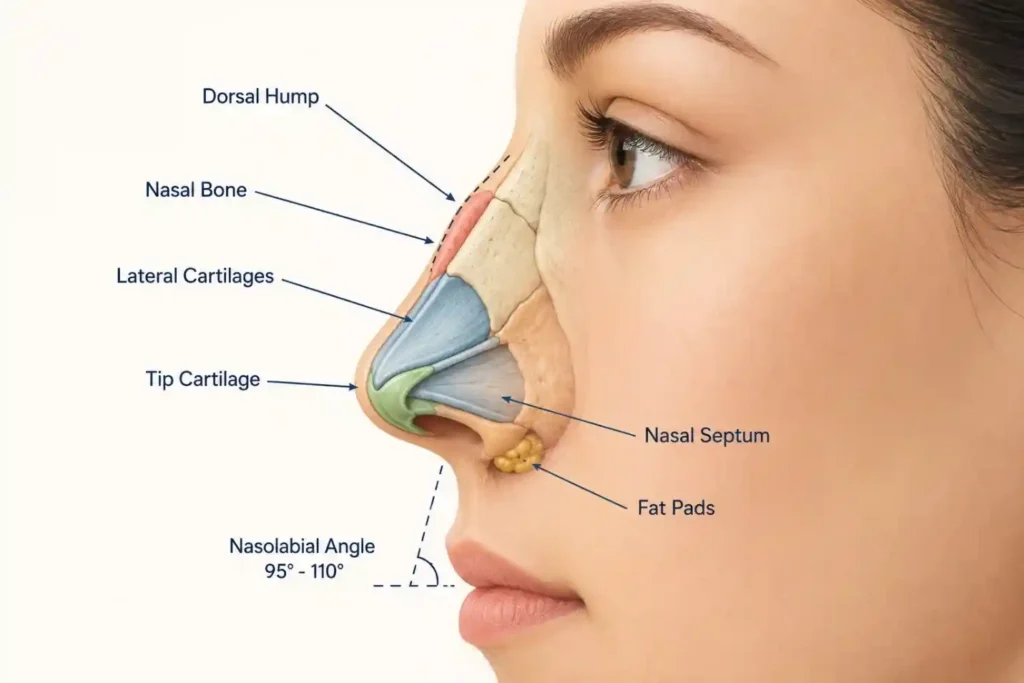
Nasal Anatomy Infographic
Who Seeks Rhinoplasty?
The reasons for pursuing rhinoplasty are diverse, but the most common include:
- Improving the overall shape of the nose
- Correcting a drooping or wide nasal tip
- Straightening a deviated or crooked nose
- Reducing excess tissue in fleshy noses
- Removing a dorsal hump (often called an aquiline or eagle nose)
- Treating breathing problems such as snoring and sleep apnea
- Revision of previous unsatisfactory surgery
- Reconstruction of the nose after trauma or accident
According to ASPS statistics from 2023, approximately 20% of all rhinoplasties in the United States are performed primarily to improve breathing, not for cosmetic reasons. This underscores the operation’s role as a genuine medical intervention.
Rhinoplasty in Men: Refinement Without Losing Masculinity
Men now account for about 20 to 25% of all rhinoplasty patients. A study published in the Aesthetic Surgery Journal in 2021 showed a rise of over 15% in male rhinoplasty over the past decade.
Male rhinoplasty differs fundamentally from female rhinoplasty. The male nose is naturally about 10% larger, with thicker skin and stronger cartilage. The nasolabial angle must remain under 95 degrees to avoid a feminized, operated look. The bridge is typically kept straighter with less curvature. The goal is never to completely eliminate a hump or create an overly small nose, but rather to produce a natural, well-proportioned nose that still reads as masculine.
Nose Types from a Surgical Perspective
Every nose tells a different story. From a structural standpoint, surgeons generally encounter three main types, though many noses are a blend:
Fleshy Nose: Thick, oily skin and relatively weak cartilage. This type accounts for about 20–25% of patients. The main challenge is that thick skin can obscure the delicate changes made to the underlying cartilage. Without reinforcing the tip with cartilage grafts, the result may gradually soften. Fleshy nose surgery demands exceptional skill and experience.
Bony Nose: Thin skin, firm cartilage, and a gentle curve. These noses often yield excellent, long-lasting results. Because the skin is thin, even the smallest alterations to the framework are clearly visible. Bony noses represent roughly 35–40% of cases and are particularly common in the Middle East and Iran.
Humped Nose (Aquiline): A pronounced convexity on the bridge, usually from an overgrowth at the bone-cartilage junction. About 9% of the world’s population has some degree of nasal hump. This type is often associated with a deviated septum, making surgery both cosmetic and functional.
Not Just for Beauty: Medically Necessary Procedures
Not every nose surgery is cosmetic. According to Harvard Health, one of the most common medical reasons for rhinoplasty is breathing difficulty. Nasal obstruction can impair exercise, sleep, and overall health. When medications like nasal sprays or sleep apnea treatments fail, surgery becomes the next step.
Three other types of surgery arise from medical necessity:
Septoplasty: Correction of a deviated nasal septum. About 70–80% of people have some septal deviation, but when severe, it can block one or both nostrils, cause chronic sinusitis, and lead to snoring. Septoplasty is a functional procedure and usually does not change the external appearance of the nose.
Revision Rhinoplasty: For patients unhappy with a previous outcome or suffering from issues like collapse, asymmetry, valve narrowing, or breathing trouble. The rate of revision rhinoplasty ranges from 5 to 15% of primary cases, depending on the original surgeon’s skill and the extent of change requested. Revision surgery is significantly more complex due to scar tissue and previously altered cartilage. Patients are generally advised to wait at least a year before pursuing revision.
Functional Rhinoplasty: This surgery is exclusively aimed at improving nasal airflow and is often covered by health insurance. It may involve repairing internal or external nasal valves, reducing enlarged turbinates, or reconstructing the air passage.
Surgical Techniques: Open, Closed, and the New Generation
The choice between techniques depends entirely on the patient’s anatomy and the surgical goals.
Closed Rhinoplasty: All incisions are placed inside the nostrils. There is no external scar, less swelling and bruising, and a shorter recovery. This approach is ideal for subtle to moderate changes—like refining the tip, smoothing a small hump, or narrowing the bridge. Surgery typically lasts 1.5 to 2.5 hours. The limitation is that the surgeon has a more restricted view of the deeper structures.
Open Rhinoplasty: In addition to internal incisions, a small 4–6 mm cut is made across the columella. This allows the surgeon to lift the skin and access the entire framework with direct vision. Open rhinoplasty is the preferred method for complex cases, severe deviations, revision surgeries, and cases requiring extensive grafting. The procedure takes 2.5 to 4 hours. The tiny scar fades over 6 to 12 months and becomes barely perceptible in most patients.
Piezo Surgery: In recent years, piezoelectric technology has brought a new level of precision to rhinoplasty. Instead of traditional chisels and hammers, ultrasonic waves are used to cut and sculpt bone at the micron level without damaging surrounding soft tissue. A 2020 study in the Aesthetic Surgery Journal demonstrated that piezo surgery reduces post-operative bruising and swelling by up to 40%, decreases intraoperative bleeding, and shortens recovery by 3 to 5 days on average. It is a remarkable tool—but still just a tool. The surgeon’s skill remains the decisive factor.
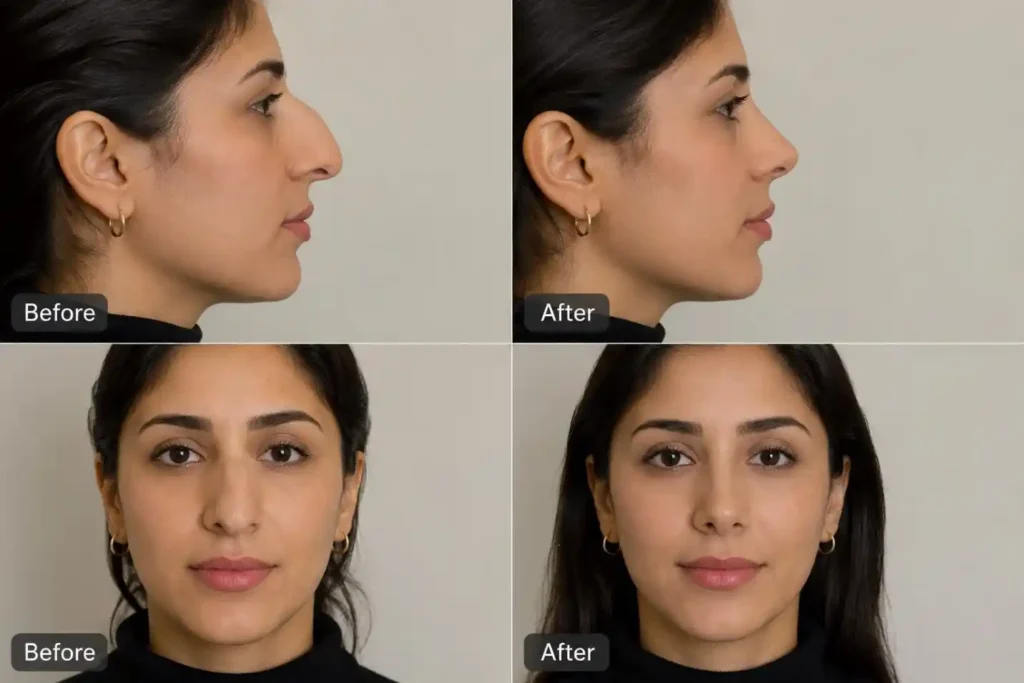
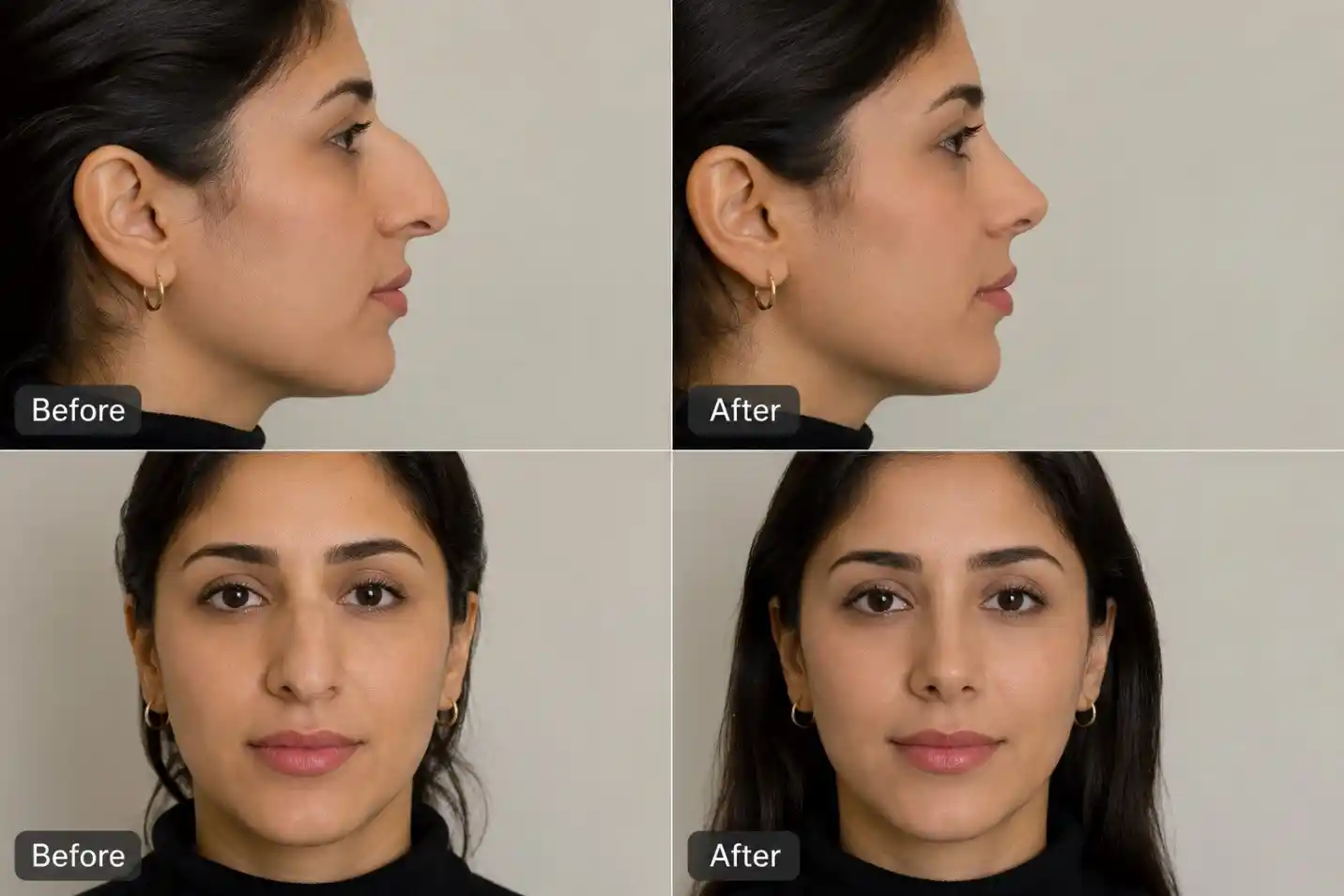
Before and After Rhinoplasty – Natural-looking results that preserve facial identity and harmony
The Surgical Journey: From Consultation to the Operating Room
A successful rhinoplasty begins well before the operating room. It starts with a thorough consultation. The surgeon reviews your medical history, performs a detailed physical exam of the nose inside and out, takes photographs from multiple angles, and may request a CT scan. In advanced clinics, 3D computer morphing allows you to see an approximate preview of the possible result—but it’s a preview, not a guarantee.
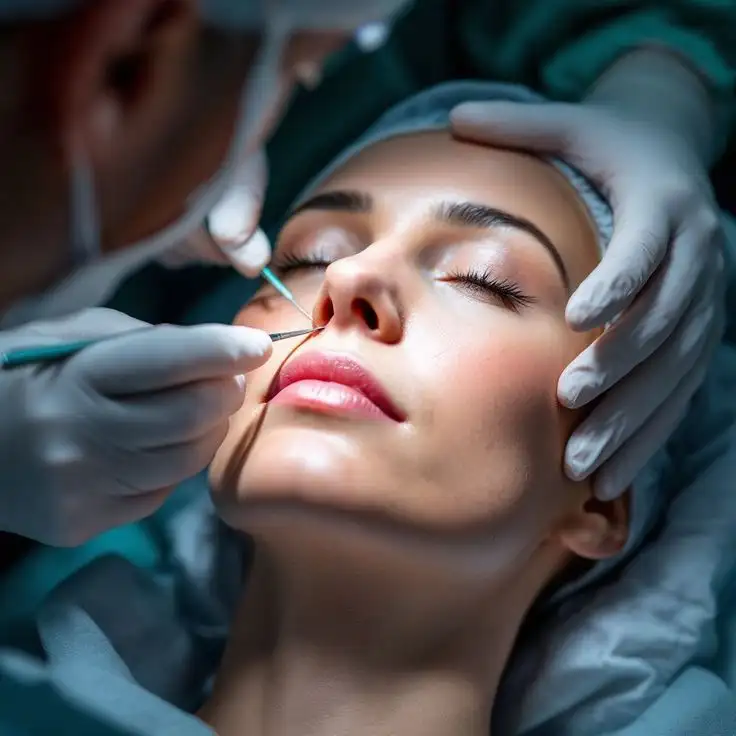
On the day of surgery, under general anesthesia administered by an anesthesiologist, the surgeon makes the planned incisions, separates the skin from the bone-and-cartilage framework, and delicately sculpts the new form. If needed, the patient’s own cartilage (usually from the septum, ear, or in complex cases the rib) is harvested for grafting. After the work is done, the nose is covered with a splint—sometimes custom-made with 3D printing—to control swelling and protect the new shape. The splint is usually removed 5 to 7 days later, giving the patient a first glimpse of the new nose, still swollen.
Recovery: A Week-by-Week Timeline
Post-operative care is just as important as the surgery itself. Diligent adherence to the surgeon’s instructions can make the difference between a great result and a mediocre one.
- Week 1: Swelling and bruising peak around day 2–3 around the eyes and cheeks, then begin to subside. Keep the head elevated 30–45 degrees at all times, even while sleeping. Cold compresses (without pressure on the nose) help in the first 48 hours; warm compresses from day 3 onward. The splint stays on until day 5–7. Avoid heavy laughing, coughing, and sneezing (if you must sneeze, keep your mouth wide open). Diet should be completely soft and liquid. Showering is permitted from day 3 with extreme care to keep the nasal cast dry.
- Week 2: The splint is removed. The bulk of the swelling is gone, though the nose remains puffy. Internal stitches dissolve or are removed. Nasal rinsing with saline solution begins and should continue for 2–3 months. Light daily activities can resume.
- Month 1: About 60–70% of swelling disappears. Social activities can restart. Walking is fine, but strenuous exercise, swimming, sauna, and jacuzzi remain off-limits.
- Months 1–3: Residual swelling gradually resolves. Sense of smell—which may have temporarily diminished—usually returns fully. Eyeglasses must still be avoided for at least 2–3 months.
- Months 3–6: Most swelling is gone, and the nose approaches its near-final form. The temporary numbness at the tip, experienced by nearly all patients, gradually fades.
- Months 6–12: Microscopic tissue swelling resolves completely, and the nose settles into its permanent shape. In patients with thick skin (fleshy noses), this process can take up to 18 months.
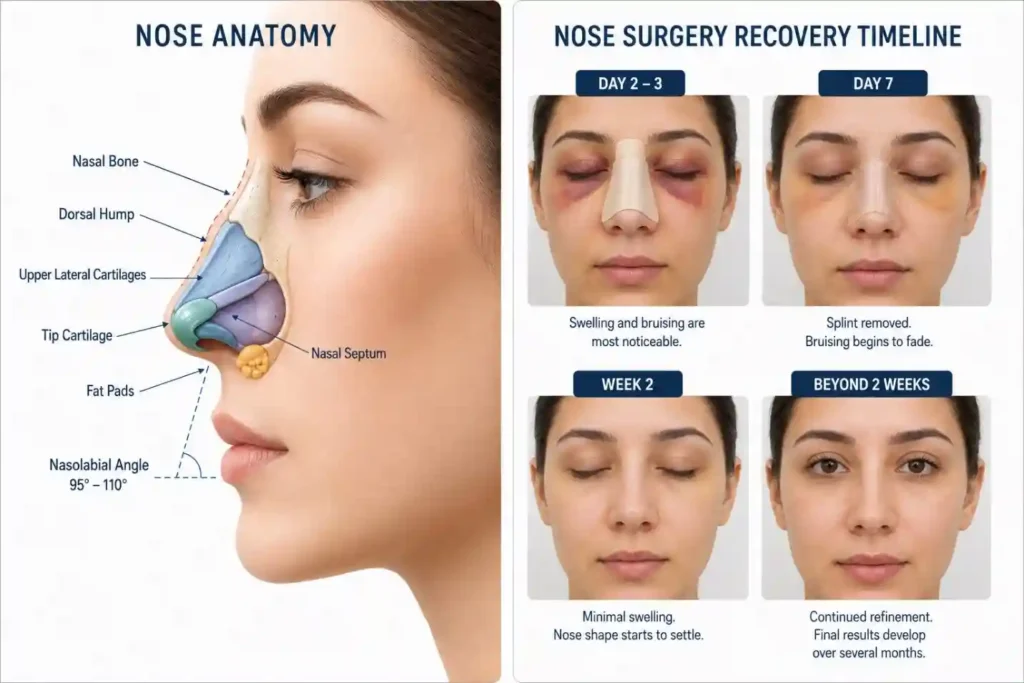
Rhinoplasty Recovery Timeline – The gradual fading of swelling and bruising from the first week through the second week
Possible Complications: An Honest Picture
Like any surgery, rhinoplasty carries potential risks. Data from JAMA Facial Plastic Surgery indicates the overall rate of serious complications is under 5%.
Common and temporary side effects include swelling, bruising, nasal congestion, a brief reduction in sense of smell, temporary numbness of the tip, minor bleeding, and mild headaches. These are normal parts of the healing process.
Rare but more serious events include severe bleeding, infection (incidence below 1%), adverse reaction to anesthesia, excessive scar tissue, septal perforation, nasal valve narrowing, and the need for revision surgery. Choosing a qualified, experienced surgeon and fully disclosing your medical history—especially any bleeding disorders, use of blood thinners like aspirin or warfarin, and smoking habits—dramatically reduces these risks.
Final Word: Rhinoplasty, a Journey to Your Best Self
Rhinoplasty is a deeply personal decision—one that can give you the feeling you have long waited for: standing in front of the mirror and feeling genuine satisfaction with the image looking back at you. Three pillars make this journey safe and successful: choosing a skilled and knowledgeable surgeon, holding realistic expectations, and committing to postoperative care.
The nose you see after surgery is not meant to turn you into someone else. It is meant to reveal the best version of yourself—a version where balance, proportion, and naturalness take center stage. If this article has addressed some of your questions, the next natural step is a personal consultation. A meeting where a doctor sits beside you, listens to your concerns, and paints a clear picture of what is possible for your face.

Natural Portrait of a Balanced Face – The quiet confidence that comes from a nose in harmony with your features