Hair and Eyebrow Transplantation: Restoring the Lost Strands of Confidence
Hair and eyebrows might seem like mere details, but they frame the face—and when that frame starts thinning or receding, self-confidence often follows. Hair and eyebrow transplantation is unique among aesthetic procedures: it is not a temporary fix, but a living, natural, and permanent solution.
The concept is elegantly simple. Hair follicles resistant to genetic balding are harvested from a donor area (usually the back and sides of the scalp) and meticulously implanted into thinning or bald areas. These follicles retain their original genetic programming, meaning they continue to grow for a lifetime.
Global estimates indicate that over 1.5 million hair restoration procedures are performed annually worldwide, and the number continues to climb. Eyebrow transplantation, though less common, has seen a surge in popularity over the past decade—not only among those who have lost their brows through trauma or illness, but also among individuals seeking to restore the fullness they once had.
Why Do We Lose Hair and Eyebrows?
Hair loss is a multi-layered story. In men, androgenetic alopecia (male-pattern baldness) is the most common culprit. The hormone dihydrotestosterone (DHT) gradually shrinks follicles on the front, crown, and vertex, until they stop producing visible hair altogether.
Women typically experience diffuse thinning across the entire scalp, driven by hormonal shifts, nutritional deficiencies, extreme stress, or thyroid disorders.
Eyebrows thin for different reasons: over-plucking over many years, aging, hormonal changes, or autoimmune conditions like alopecia areata. Unlike scalp hair, eyebrow hair has a shorter growth cycle, and once it’s gone, it rarely returns on its own.
The good news lies at the back of the head. The hair follicles in the occipital region and lower neck are genetically resistant to DHT. This is why even in advanced baldness, a dense band of hair persists at the back. This “donor bank” is the foundation of every successful transplant.
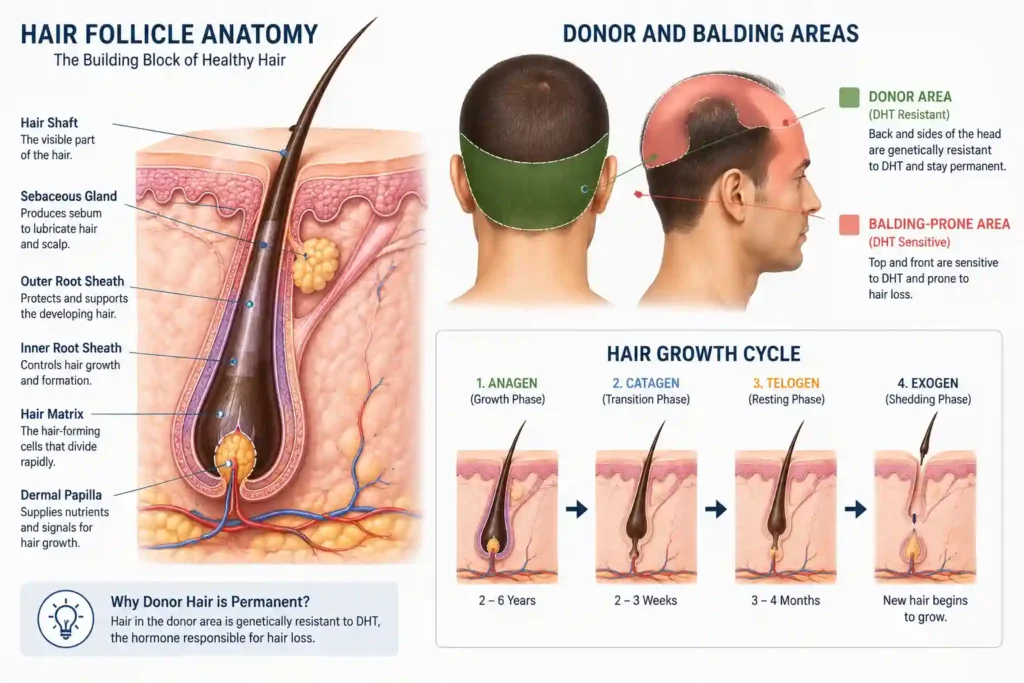
Hair Follicle Anatomy and Donor Zone Infographic – Illustration of follicle structure, hair growth cycle, and the DHT-resistant donor area at the back of the scalp.
Who Is a Good Candidate?
Not everyone is a suitable candidate, and not all suitable candidates get the same result. A thorough evaluation by a specialist determines candidacy. Still, the most common groups seeking hair restoration include:
- Men with male-pattern baldness who have an adequate donor supply.
- Women with diffuse thinning or a receding hairline.
- Individuals with scarring from burns, accidents, or previous surgeries.
- Those whose eyebrows have thinned from years of over-plucking, thyroid disease, or aging.
- Anyone with a healthy donor area—adequate density and hair shaft thickness.
An important caveat: if hair loss is still actively progressing, a surgeon will usually recommend medical stabilization (finasteride, minoxidil) before proceeding with surgery. Transplanting into an area of ongoing active loss can lead to an unsatisfactory outcome.
Harvesting Techniques: FUT, FUE, and Beyond
Two main extraction methods exist, each with its own set of trade-offs.
FUT (Follicular Unit Transplantation, Strip Method): The surgeon removes a narrow strip of skin from the back of the scalp. This strip is dissected under a microscope into individual follicular units (1–4 hairs each). The advantage is the ability to harvest a large number of grafts in a single session (4000 or more). The trade-off is a linear scar at the donor site, a longer recovery, and more postoperative discomfort.
FUE (Follicular Unit Extraction): Individual follicles are extracted one by one using tiny punch tools (0.6–1 mm in diameter). No strip is removed, leaving only tiny dot scars that are virtually invisible, even with short hair. Recovery is faster and less painful. The downside: a single session typically yields fewer grafts than FUT, and the cost is higher.
Micro-FUE / SUT: Refinements using even finer punches have emerged, minimizing tissue damage further, though they require exceptional skill and more time.
Eyebrow Transplantation: A Different Art Form
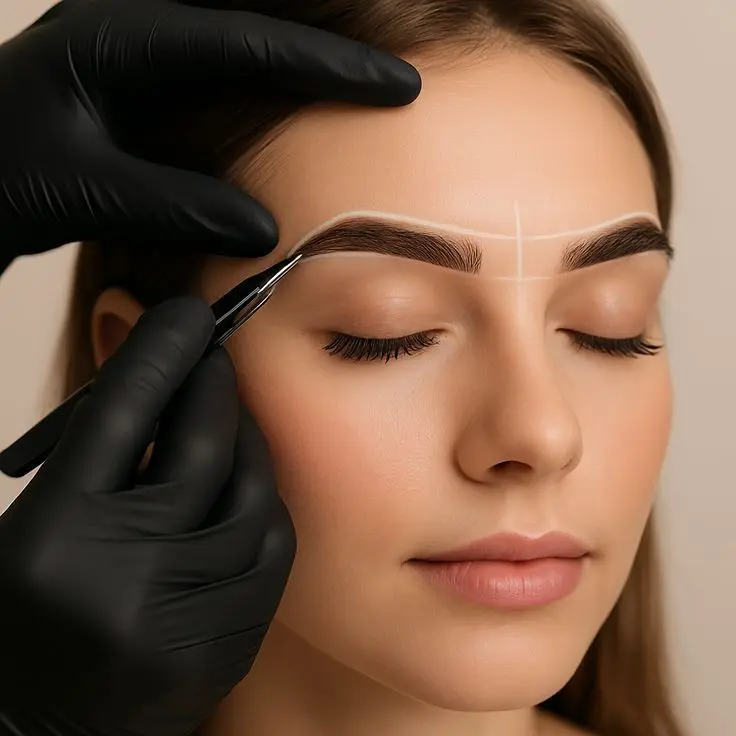
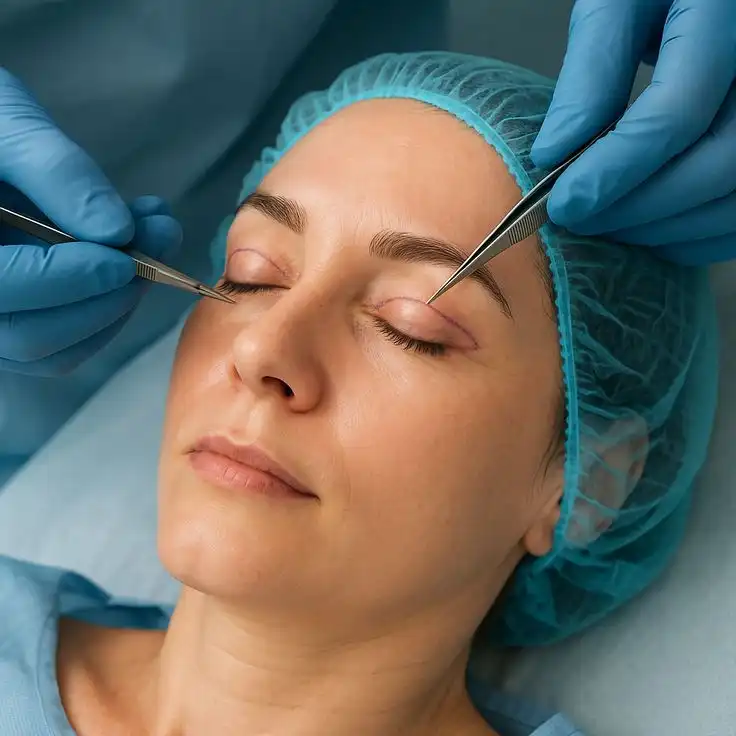
Eyebrow transplants are technically far more demanding than scalp procedures. The goal is not density, but absolute naturalness. Each hair must be placed at a precise angle, depth, and direction to replicate the natural eyebrow pattern.
Natural eyebrow hairs grow in varying directions: upward near the nose, horizontally in the middle, and downward toward the tail. Eyebrow follicles almost always contain a single hair, so the surgeon must use single-hair grafts exclusively. Even a slight miscalculation in angle or the mistaken use of a multi-hair graft can produce an artificial, “doll-like” appearance.
Hairs harvested from the scalp are inherently longer and thicker than eyebrow hairs. So the surgeon must select the very finest follicles and implant them at a very superficial angle. Patients must also trim their new eyebrow hairs every few weeks, because they will continue to grow like scalp hair.
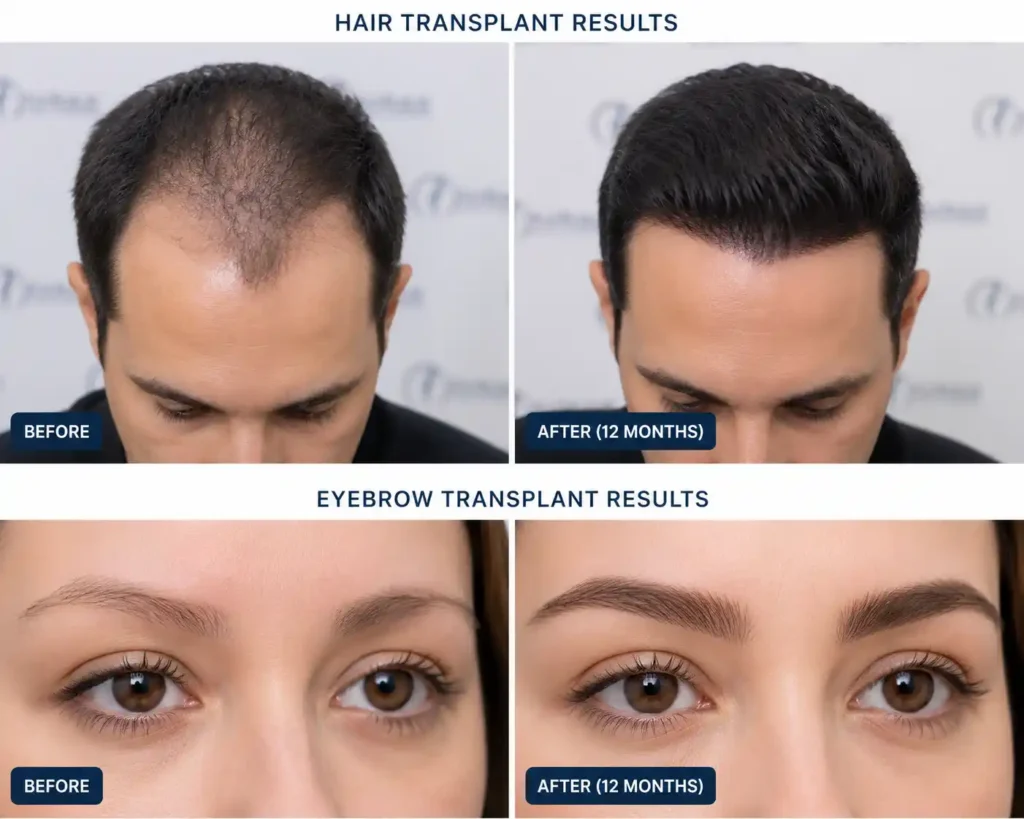
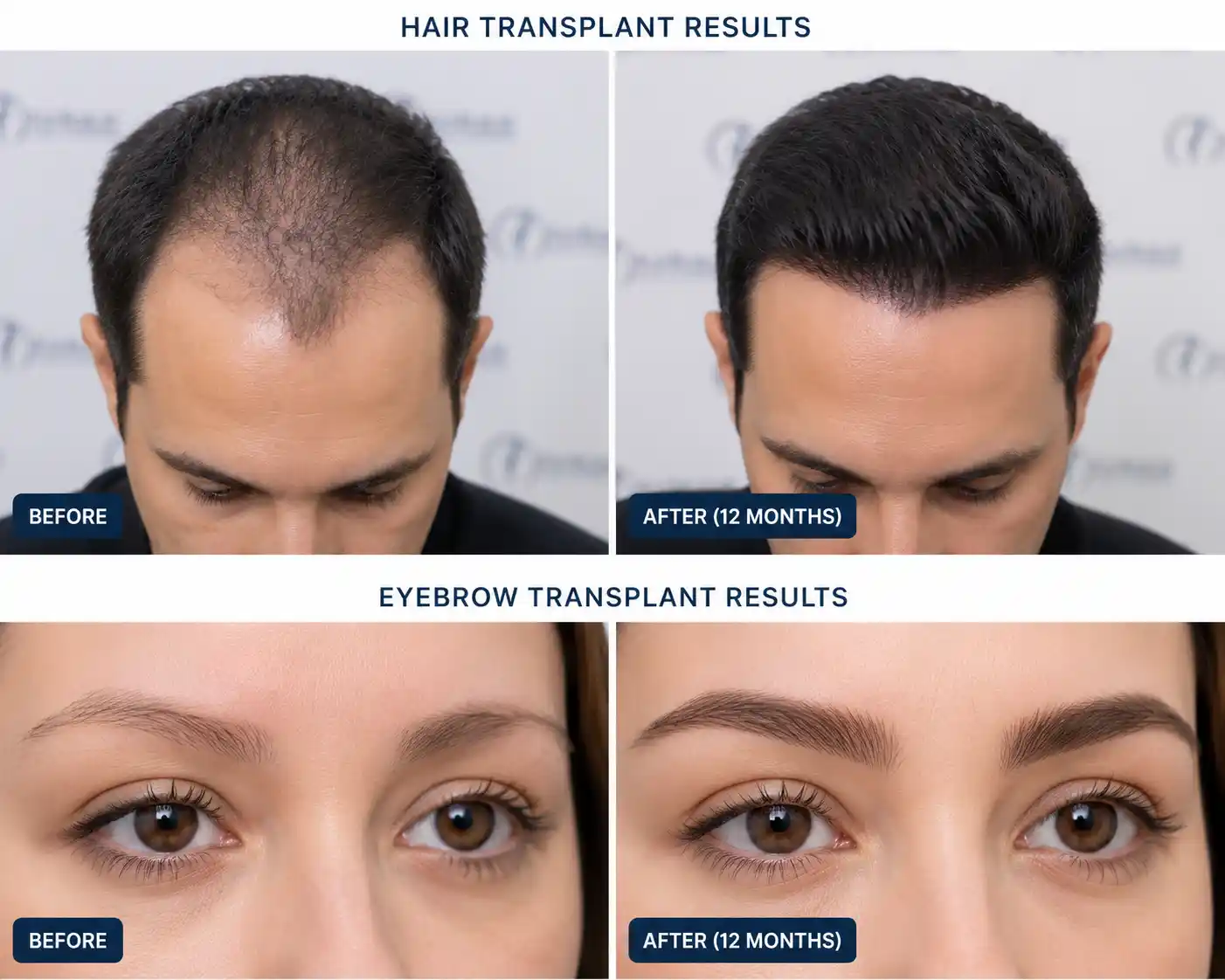
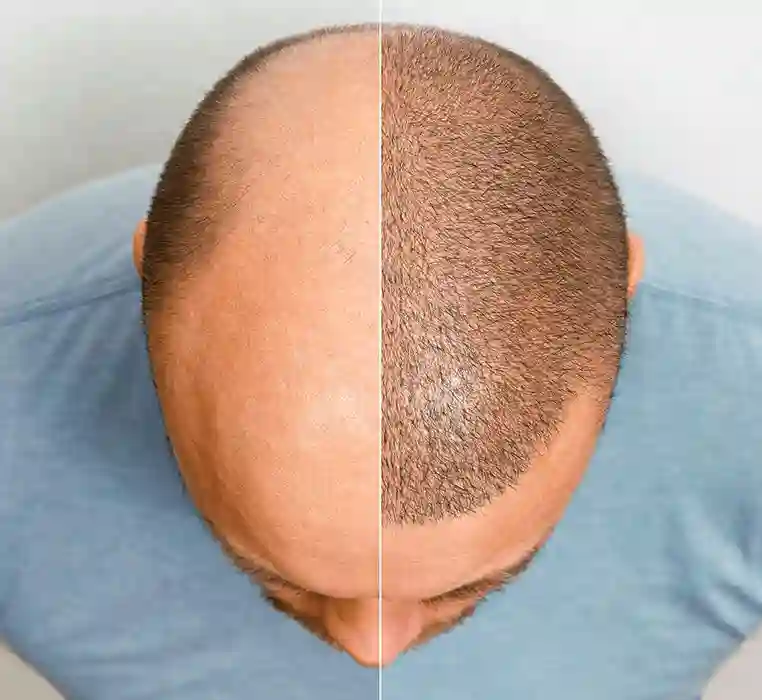
Before and After Hair and Eyebrow Transplantation – Natural, face-framing results with full coverage of bald areas and restoration of thick, natural brows.
The Procedure: Step by Step
It all begins with a detailed consultation. The physician assesses the pattern of hair loss, donor density, follicle quality, and overall health. A realistic plan is then designed, taking into account the patient’s age and the likely progression of future hair loss. The new hairline is drawn to match facial anatomy and age, ensuring a natural, non-artificial appearance.
On the day of surgery, donor and recipient areas are numbed with local anesthesia. In FUT, the strip is excised and the wound sutured. In FUE, individual follicles are extracted one at a time. This phase can last 2–4 hours.
The harvested grafts are then sorted and cleaned under microscopes by a team of technicians. Next, the surgeon creates tiny recipient sites—microscopic incisions that dictate the angle, depth, and direction of every single hair. This is the most artistic part of the procedure. Finally, the grafts are gently placed into these sites, one by one.
A full scalp session (2000–4000 grafts) typically takes 6–8 hours. Eyebrow transplantation (300–500 grafts) takes about 2–3 hours.
Growth and Recovery: The Truth Patients Must Embrace
The final result does not appear overnight. Patience is paramount.
- Week 1: Tiny crusts form around the implanted grafts. They must never be picked. The donor area may be slightly red and tender. Gentle washing with a prescribed solution begins on day 2 or 3. Light daily activities can resume.
- Weeks 2–4: Crusts shed. This is when the notorious “shock loss” occurs: roughly 80–90% of the transplanted hairs fall out. This is completely normal. The follicle roots are alive and well inside the skin, preparing for a new growth cycle. Shock loss is actually a positive sign.
- Months 2–3: The “dormant phase.” From the outside, nothing much seems to be happening, but beneath the surface, follicles are regenerating. This is the most psychologically challenging period for patients. Trusting the process is essential.
- Months 4–6: The first new hairs appear as fine fuzz and gradually thicken and lengthen. The patient starts to notice the change.
- Months 7–12: About 60–70% of the final result is visible. Hair is thicker and natural-looking.
- Months 12–18: The final outcome. Follicles are fully established and are growing in sync with the body’s natural cycle. For eyebrow transplants, the result can usually be judged by month 6–9.
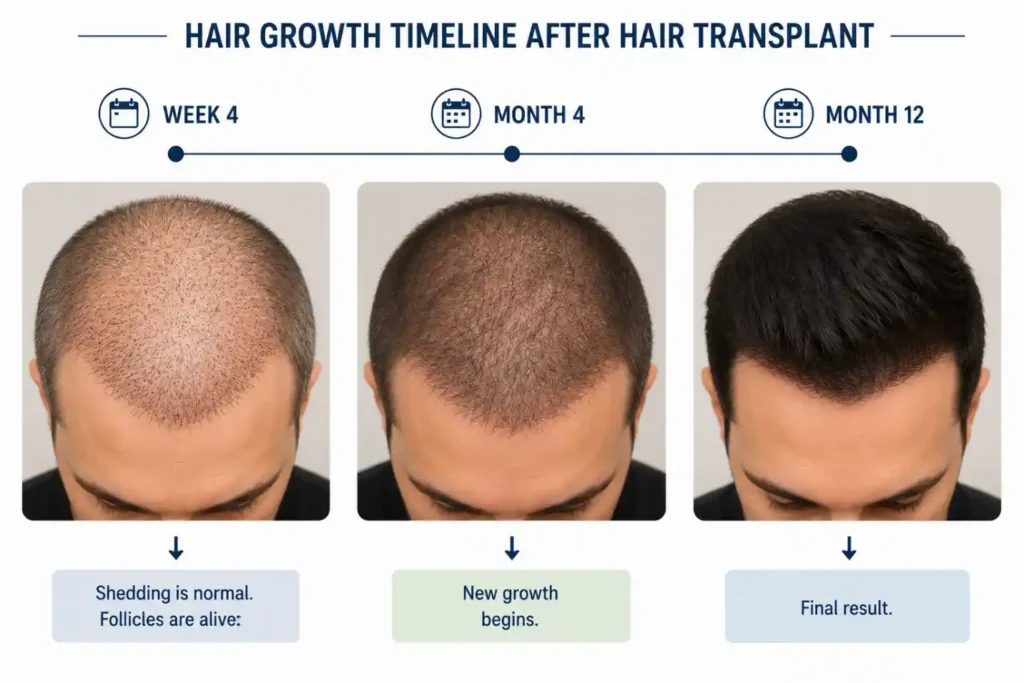
Hair Transplant Growth Timeline – Visual representation of shock loss, initial fuzz, and final result from month 1 to month 12.
Potential Complications: An Honest Overview
Hair transplantation is a low-risk procedure, but it is not risk-free. Transparency on this subject builds trust.
Common, temporary effects: Forehead and eye swelling (especially days 3–5), itching in donor and recipient areas, temporary numbness at the donor site (in FUT), skin redness, graft crusting, and mild headaches.
Rarer events: Infection (incidence below 1%), prolonged bleeding, ingrown hairs (tiny cysts), necrosis of the recipient area (very rare, usually due to poor technique), prominent donor scar (particularly with FUT), and an unnatural result (pluggy or row-like appearance) from inexperienced hands.
Choosing an experienced medical team, following aftercare instructions meticulously, and maintaining realistic expectations drastically reduce these risks.
Final Word: Restoring What Was Lost
Hair and eyebrow transplantation is more than a cosmetic surgery. It is the restoration of something you once had and lost—not just strands of hair, but the feeling you used to have when you looked in the mirror: genuine satisfaction with your own image.
The journey requires patience. But at the end of it, when your new hair moves in the wind, or when your face looks complete and vibrant without an eyebrow pencil, you’ll know it was worth it.
If this article has answered your questions and brought you closer to a decision, the next natural step is a personal consultation—where a doctor examines your unique situation and draws a personalized roadmap.

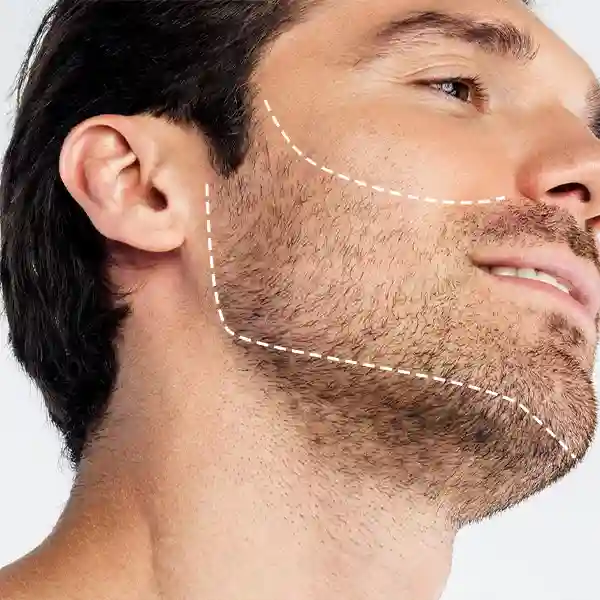
Natural Portrait of Full Hair and Eyebrows – The quiet confidence that radiates from restored, natural-looking hair and brows.